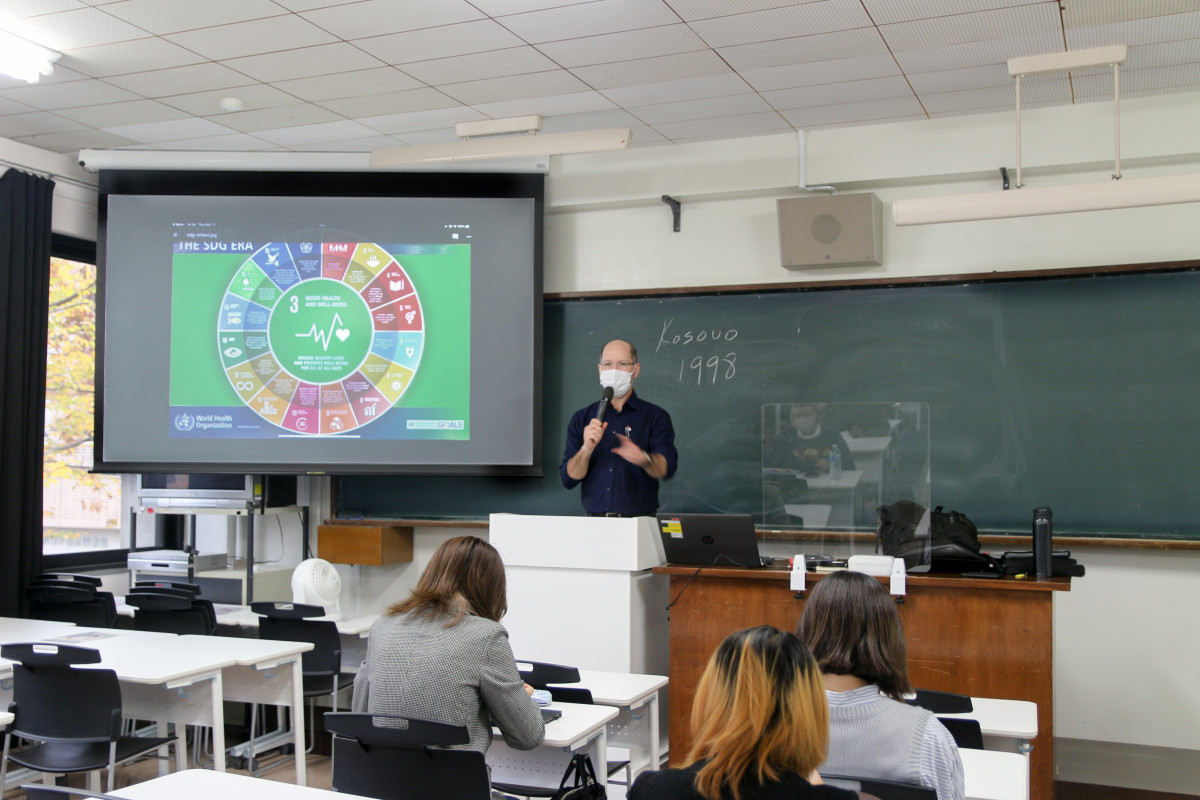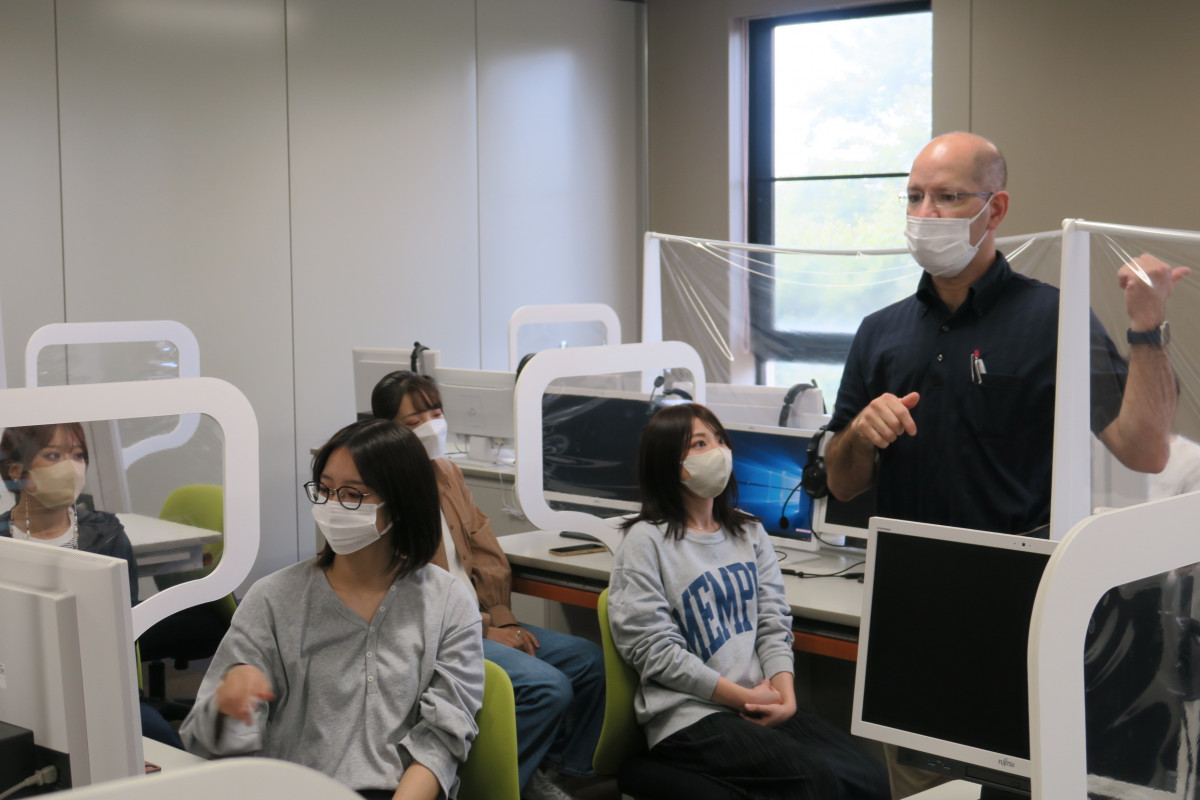

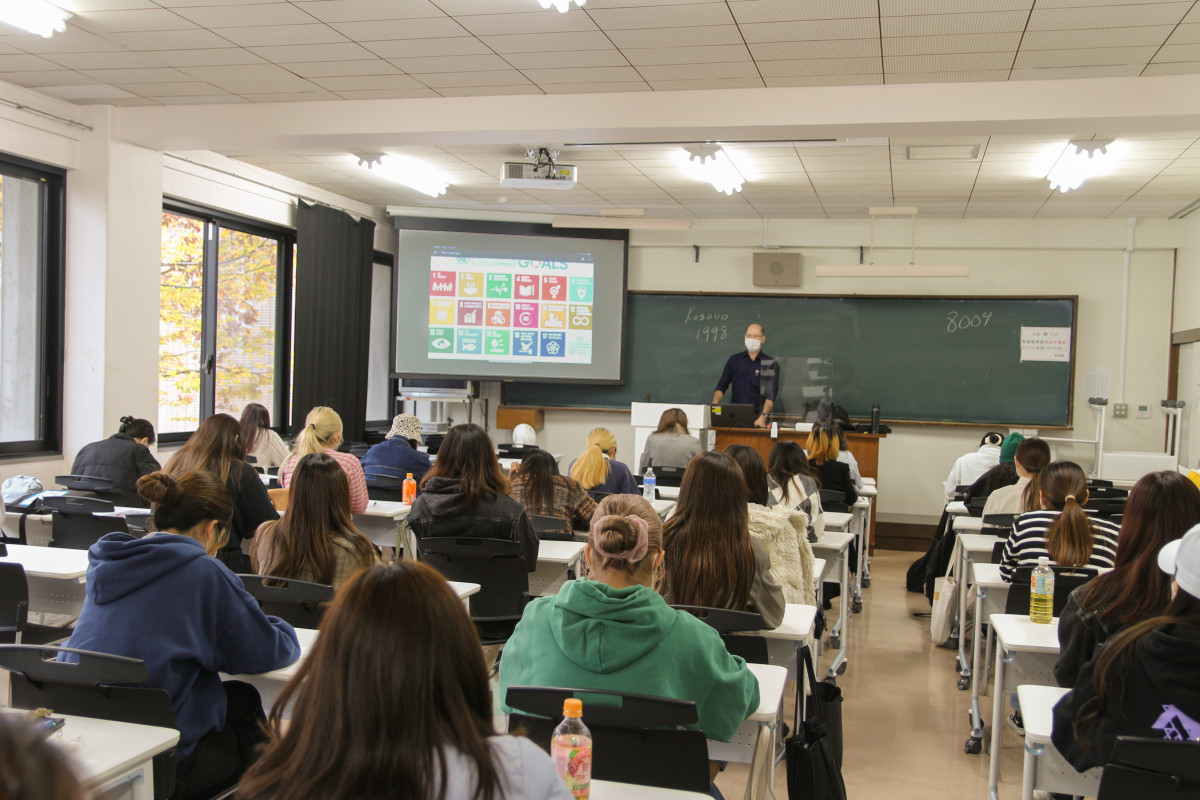
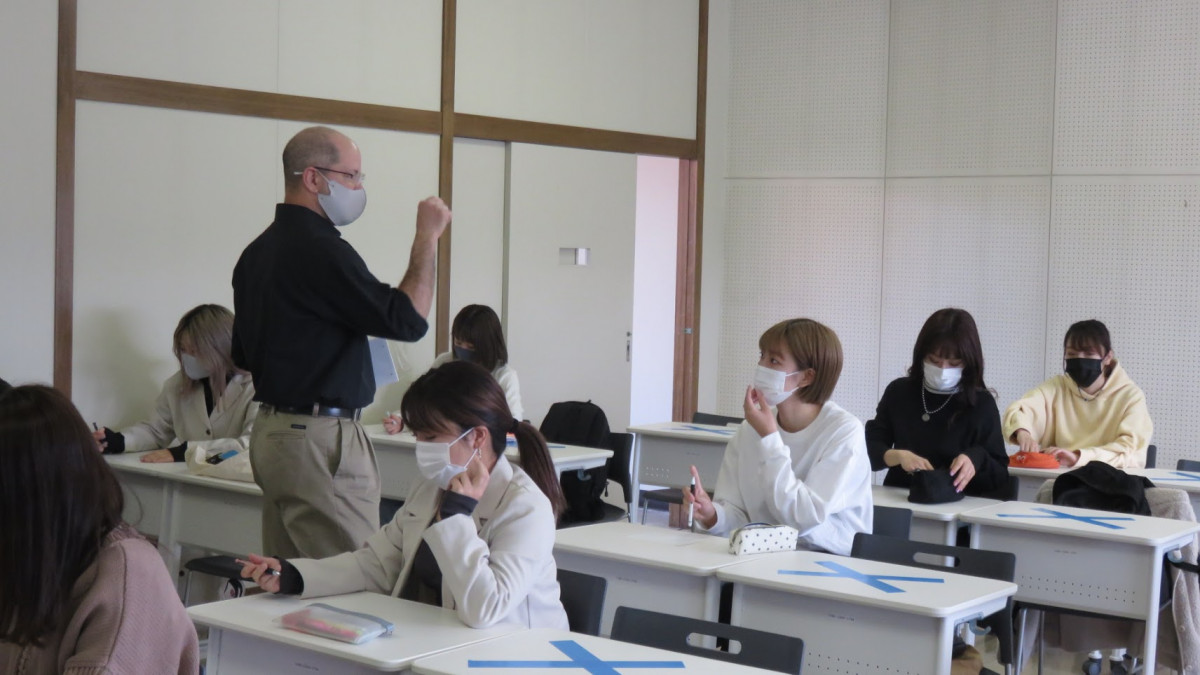
国際キャリア学科(ICD)2年生以上を対象とする専門科目「International Cooperation(国際協力研究)」は、政治的不安定や貧困、犯罪、ジェンダー・ギャップなど開発途上国が抱える諸問題について討論し、理解することで、受講生の視野と世界観を拡げることを目標とする授業です。
以下は担当のグレゴリー・オキーフ先生(米国出身)による授業紹介です。
「International Cooperation 」
The international cooperation course introduces students to the world they often never see. The common image of international cooperation courses is that it is about helping people in developing countries. While this is not false, it is only a small part of what it is. It can also help them become more knowledgeable and aware of their own situation here in Japan. Students at Fukuoka Jogakuin University are blessed with the opportunity to be able to make their own future. Everyone has disadvantages, but to be able to recognize your own advantages is crucial to a student's development.
Traditionally international cooperation courses go into detail of the good that Non-Profit/Non-Government Organizations (NPO/NGOs) do around the world as well as the application of the Sustainable Development Goals (SDGs). There are plenty of examples of this and these accomplishments are well documented. But this course also explores the flaws in the system. Students are shown the difference between well organized NGOs versus establishment backed NGOs. I teach my students how to critically absorb opinions from all various sources of information. Students with the ability to critically think understand evidence based decisions they conclude through their own research. My method of teaching is connected to the documentation of events and social movements through film, which is a skill that I have personally developed through the years. Documentaries offer a clear insight into a specific view of a certain ideological framework. These views can include or omit information based on their stance on the subject at hand. I teach students that using critical thinking skills to absorb such information is crucial to their own development. The documentaries used in this class are all examples of something most students would never watch on their own. But many students are grateful to be introduced to such information after watching them.
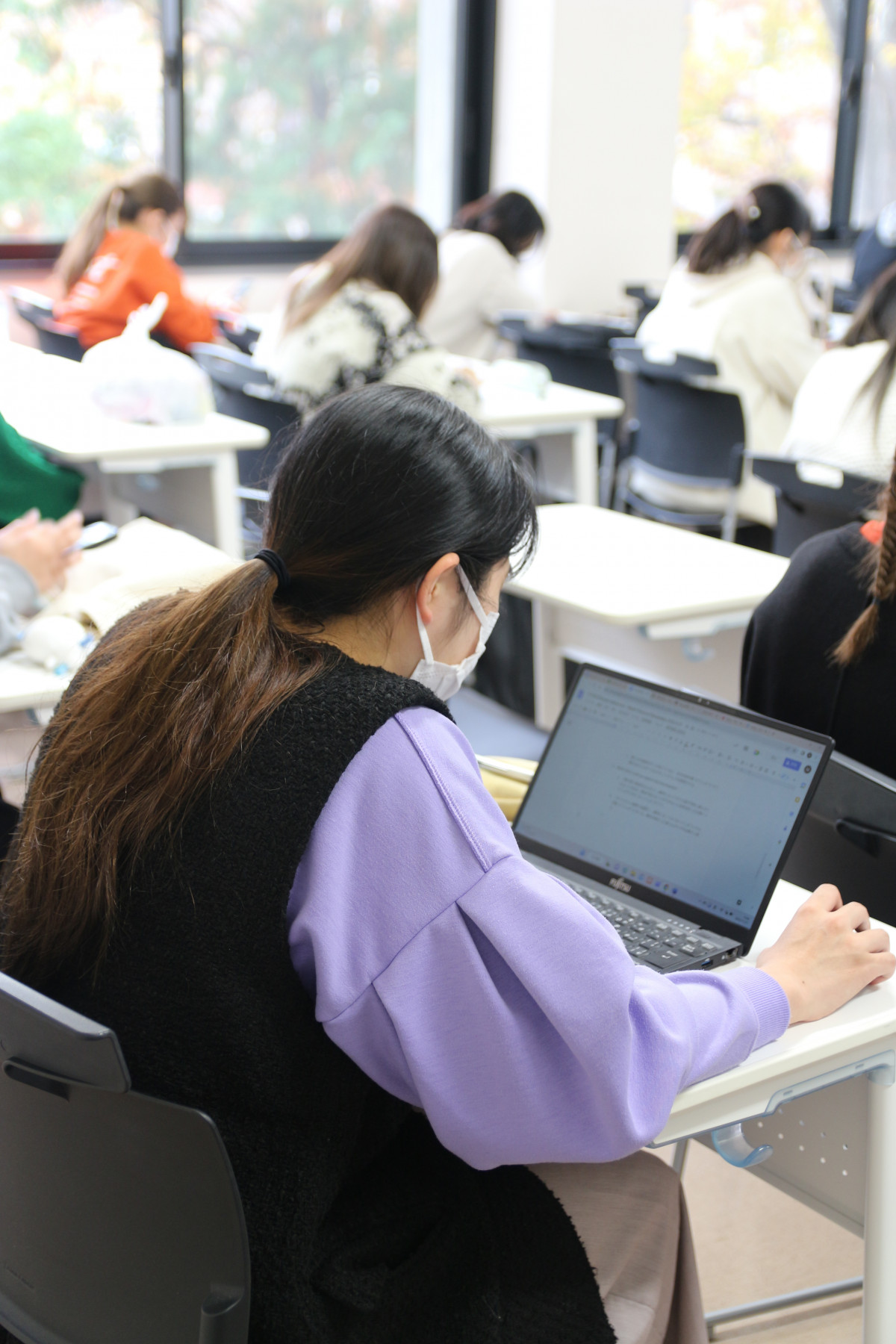
In this course, we study several topics ranging from the accomplishments of Dr. Tetsu Nakamura in Afghanistan to child labor in the chocolate industry as well as war and conflicts throughout the world and how they affect or have affected the areas where fighting takes place. We also study how only giving money isn’t the answer but rather volunteering time and skills is much more valuable to people in developing areas of the world.Students answer questions about these topics in real time through Google Classroom either on the laptops or smartphones.
Students are expected to write several reports as well as perform one presentation during the course. This course is taught bilingually with a focus on communication rather than a specific language. Although certain English keywords are often introduced throughout the course. Students will hopefully recognize how blessed they are to live in a peaceful society.