
「TOEIC対策の授業」と聞くと、皆さんはどんなイメージを持っていますか?
- ひたすら問題を解く
- ビジネス専門用語を暗記する
- テクニックを中心に学ぶ
実は、そのどれも少し違います。
国際英語学科1年次必修科目の「Test Taking Skills I」を担当するのは、これまで何度もTOEICを受験し、長年にわたり英語教育にその知識と経験を還元してきた柴田雄介教授です。
この授業では、TOEIC Listening & Reading Test を題材として、単なる「試験対策」にとどまらない、実践的な英語力を養っていきます。
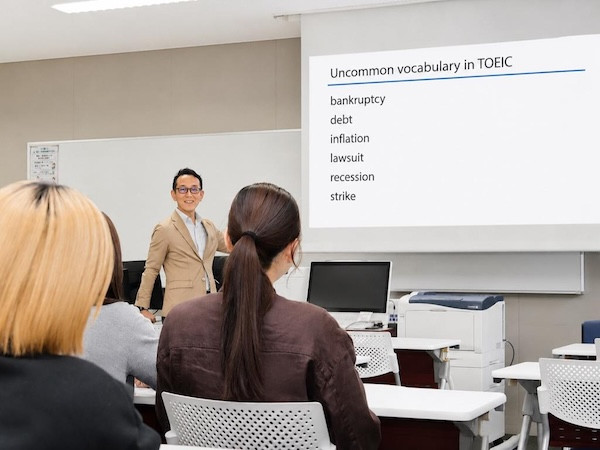
まず、授業で特に重視しているのは「語彙力」です。TOEICに限らず、知っている単語が増えるほど、Listening も Reading も理解しやすくなります。逆に、文法を理解していても、語彙が不足していると内容理解は難しくなります。そこでまず重要になってくるのが、「どのような単語を優先的に学ぶべきか」という視点です。TOEICは「ビジネス英語のテスト」というイメージを持たれることが多いため、「難しいビジネス専門用語を勉強しなければならない」と誤解されがちです。しかし実際には、同僚同士の会話、店舗での接客、メール、旅行、イベント案内など、「会社という舞台の日常会話」が中心です。そのため授業では、TOEICに頻出する語彙から優先的に学び、効率的に英語力を伸ばしていきます。
More than simply answering questions: developing practical English skills and effective strategies
What sort of image comes to mind when you hear the phrase “a TOEIC preparation course”?
Perhaps:
- endlessly working through practice questions
- memorising difficult business terminology
- focusing mainly on test-taking techniques.
In reality, Test Taking Skills I is rather different.
This compulsory first-year course in The Department of English as a Global Language is taught by Professor Yusuke Shibata, who has taken the TOEIC test many times himself and has spent years applying that knowledge and experience to English education.
Using the TOEIC Listening & Reading Test as its foundation, the course aims not merely to prepare students for the exam, but to help them develop practical and usable English skills.
One of the areas given particular emphasis in class is vocabulary. Quite simply, the more words students know, the easier it becomes to understand both spoken and written English. On the other hand, even a strong grasp of grammar is often not enough if vocabulary is limited.
For that reason, an important part of the course involves learning which words should be prioritised. Because TOEIC is often associated with “business English”, many people assume that students must memorise highly specialised business terminology. In fact, however, the test mainly focuses on everyday communication in workplace settings: conversations between colleagues, customer service interactions, emails, travel arrangements, and event announcements.
Students therefore focus first on the vocabulary that appears most frequently in TOEIC, allowing them to improve their English efficiently and systematically.
また、TOEICは英語力だけでなく、「限られた時間の中で情報を素早く処理する力」も求められる試験です。例えば Listening では、音声は一度しか流れず、メモを取ることもできません。そのため、聞いた内容をその場で理解し、記憶しながら問題を解く必要があります。またReading では、大量の英文を短時間で読み進める必要があり、速読力が求められます。このように「時間との戦い」の側面が強いTOEIC特有の特徴や傾向も分析しながら学習を進めていきます。
また、この授業では、「なぜその問題が出題されるのか」「出題者は受験者のどんな力を測ろうとしているのか」についても考えます。例えば、間違いの選択肢がどのような意図で作られているかを出題者目線で理解することで、不要なミスを減らし、正答率を高めることができます。
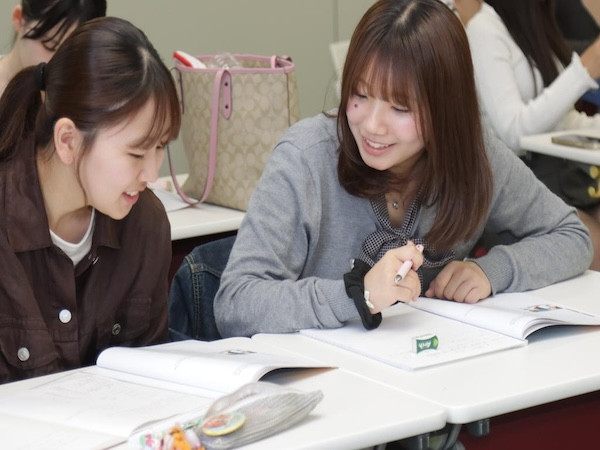
授業では「問題を解いて終わり」ではなく、実際に英語を使う活動も積極的に取り入れています。例えばTOEIC Part 3 の会話スクリプトを使いロールプレイを行うなど、学生同士で登場人物になりきりながら会話を再現します。また Part 4 のモノローグ問題では、原稿を音読しながら、英語のリズムやイントネーションを意識した発話練習も行います。
The course also explores the unique nature of the TOEIC test itself. TOEIC measures not only English ability, but also the capacity to process information quickly under time pressure.
In the Listening section, recordings are played only once and note-taking is not permitted. Students must therefore understand, remember, and respond to information in real time. In the Reading section, candidates are required to work through a large amount of written English within a limited period, making reading speed particularly important.
Lessons therefore include analysis of the specific characteristics and patterns found in TOEIC, including its strong emphasis on time management.
Another important aspect of the course is learning to think from the perspective of the test writer. Rather than simply checking answers, students consider why particular questions are asked and what abilities the test is designed to measure. By understanding how incorrect answer choices are constructed, students can avoid unnecessary mistakes and improve their overall accuracy.
At the same time, classes are designed to be active and engaging. Students do not simply sit and complete practice exercises throughout the lesson. For example, students use TOEIC Part 3 conversation scripts for role-plays, recreating workplace situations with classmates. In addition, Part 4 monologues are used for reading-aloud activities in which students can practise rhythm, stress, and intonation in spoken English.
このように、Test Taking Skills IではListening問題を「受け身」で処理するだけではなく、Speaking 活動も組み合わせることで、より能動的かつ実践で使える英語を身につける授業を目指しています。将来、海外留学、国際的な仕事、観光、航空業界などに興味がある人にとって、実践的な英語力を学べる環境が国際英語学科には豊富にあります。
In this way, students are encouraged not only to process listening tasks passively, but also to develop their speaking skills through active participation. The aim of Test Taking Skills I is to help students build practical English skills that can be used confidently in real-world situations.
For students interested in studying abroad or pursuing careers connected with international business, tourism, or the aviation industry, the Department of English as a Global Language (EAGL) at Fukuoka Jo Gakuin offers ample opportunities to develop practical and globally relevant English skills, as demonstrated in courses such as Test Taking Skills I.