

今回は1年生科目「Freshers Seminar」に小林美香先生をお招きし、特別講演を行って頂きました。小林美香先生は、ジェンダーに関する書籍の出版や翻訳、講師として活躍されています。書籍には、『ジェンダー目線の広告観察』(現代書館)、『その<男らしさ>はどこから来たの?広告で読み解く「デキる男の現在地」』(朝日新書)、そして、翻訳書には『ジェンダー・クイア』(サウザンブックス社)があります。私達の社会における「ジェンダー」という大切な問題についてたいへん貴重なお話を頂きました。授業の様子は、Doyle准教授が英語で伝えています。英語の勉強にもなりますので、最後までご一読ください。
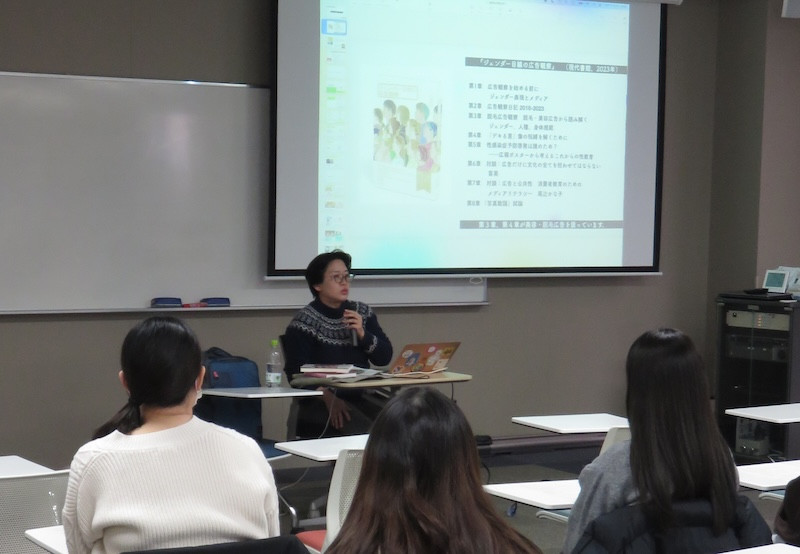
On December 17, EAGL Freshers Seminar in conjunction with AMIKAS (Gender Equality Planning Office of Fukuoka City) welcomed Ms. Mika Kobayashi as a guest speaker. Ms. Kobayashi’s expertise is in Advertising and Gender, particularly in the field of Lookism. Ms. Kobayashi looks at Advertising from the point of view how gender is portrayed. This was a very timely topic as students have just finished studying and researching about SDG5 – Gender Equality.

□ Why Observe or Study Advertising?
Ms. Kobayashi started the talk with this question. The value of advertising revenue in Japan is almost the same as defense spending in Japan! In other words, there is a huge amount of money spent on advertising in Japan today. She made the point that traditional media (TV, radio, newspaper, magazines) is outpaced by internet advertising with a growth in subscription consumers, social media. She introduced the concept of the Attention Economy – in other words, the idea that people’s attention or interests can be monetized!
The very act of observing is also a part of communication
Ms. Kobayashi introduced the words of Peter Drucker, the inventor of modern management ‘The most important thing in communication is to hear what isn’t being said’. In other words, communication depends on the recipient.
□ Looking at Commercials through the Eyes of Gender
When observing commercials, we should keep in mind that the consumer society that we live follows the gender stereotype roles. For example, a commercial for beer is portrayed differently in an advert targeting men and women. The Asahi Dry beer commercial plays on [manliness] as opposed to femininity – in other words, it focuses on the gender roles that men and women play in society. The contrast between men and women is startingly clear! And although the catch copy is the same for both commercials, the one for the men is gothic while the one for women is handwritten. Again, similarly products for deodorant also further this gender stereotype dualism. In another example, for plastic surgery the language used is different while the purpose is the same. The men’s advertisement emphasizes the time taken for the procedure, the number of places you can have the procedure, the lack of time off and the fact people won’t notice the procedure. The women’s one on the other hand, has less wording and focuses on how natural it will look. These commercials really do reflect the gender views or biases of the creator!
□ Skin Care Commercials & Lookism
Recently, skin-care advertisements emphasize the idea that a well-groomed appearance will make a good impression on others and clever phrases such as ‘successful men get hair removed’ are used which, of course, suggest that it is related to ability as well. In Japan today, there are no laws which regulate advertising that promotes inferiority complexes or lookism. Shouldn’t we question this? Is it ok for advertising to cause such harm? Shouldn’t it be regulated? Ms. Kobayashi raised some very good questions.